

role of testing in Pcb production development
Testing plays a critical role in the PCB production development process, ensuring that printed circuit boards (PCBs) meet performance, quality, and reliability standards. As electronic devices become increasingly complex, the importance of rigorous testing in PCB production cannot be overstated. Proper testing helps identify design flaws, manufacturing defects, and potential failures before the final product reaches the market, saving time, cost, and resources.
The primary goal of testing during PCB production development is to validate that the board performs as intended under real-world conditions. PCBs are the heart of modern electronic devices, and any failure can lead to significant functional issues or product recalls. By incorporating testing at various stages of the production process, manufacturers can detect issues early and correct them before they escalate into larger problems. This improves the overall reliability and performance of the product while ensuring customer satisfaction.
During pcb production, testing begins at the design stage with simulations and validations. Engineers use specialized software to simulate signal behavior, thermal properties, and component placement. This step helps identify potential issues, such as impedance mismatches, signal loss, or excessive heating, even before physical production begins. By testing designs digitally, manufacturers can reduce errors and optimize the layout for production.
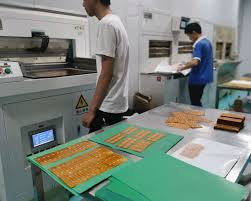
What is the role of testing in Pcb production development?
Once the physical PCB is fabricated, manufacturers conduct a series of tests to verify its structural and electrical integrity. One commonly used test during PCB production development is the Automated Optical Inspection (AOI). AOI uses cameras and software to inspect PCBs for physical defects like missing components, solder joint inconsistencies, or misaligned parts. This non-contact testing method is fast, efficient, and ideal for high-volume production.
Another critical test is the In-Circuit Test (ICT), which verifies the functionality of individual components on the board. ICT involves probing the PCB to test resistance, capacitance, and other electrical characteristics of each component. This ensures that all parts are soldered correctly and are functioning as intended. Any deviation in expected readings can indicate a short circuit, open circuit, or faulty component, which can then be addressed.
Functional testing is also an essential part of PCB production development. In this stage, the fully assembled PCB is tested under simulated operating conditions to ensure it behaves as designed. Functional tests validate the overall performance of the board by checking parameters like power output, signal transmission, and communication protocols. This stage helps confirm that the PCB will function reliably in the end product.
Stress testing, such as Thermal Cycling or Vibration Testing, is conducted to assess the board’s reliability under harsh conditions. PCBs in industries such as automotive, aerospace, and telecommunications must withstand extreme temperatures, mechanical stress, and humidity. Stress testing exposes the board to these conditions to identify potential weaknesses and ensure durability.
In conclusion, testing is a vital component of PCB production development, as it ensures the quality, functionality, and reliability of printed circuit boards. By incorporating multiple testing methodologies—from design simulations to functional and stress testing—manufacturers can deliver defect-free products that meet industry standards. Proper testing not only minimizes failures but also enhances the overall efficiency of the production process, ensuring that PCBs can perform reliably in their intended applications.