

Quality in PCB Board Assembly Manufacturing
Printed circuit boards (PCBs) are the foundation of almost all modern technology, but what industries rely on pcb board assembly manufacturing? The answer is a wide range, from consumer electronics to the power systems that run buildings. Many of the latest PCBs are smaller, lighter and more capable than older versions. This miniaturization is critical to enabling new and exciting technology, but it also makes assembling them challenging. To address these challenges, PCB manufacturers use automated machines that speed up production and ensure consistent quality.
PCBs are used in medical devices to not only administer medication but also provide valuable data and monitoring. These devices are often compact and must be able to operate with high precision based on precise sensors. To meet these requirements, medical devices rely on advanced PCBs that feature high-density components. These PCBs are found in a variety of electronic medical equipment, from pacemakers to larger pieces like X-ray and CAT scan machines.
Cars require a variety of electronic equipment, and much of it relies on PCBs. This includes audio systems that integrate navigation and entertainment, as well as safety features like blind spot detection and braking sensors. Many of these sensors must be able to withstand harsh conditions, including high temperatures and vibrations. As the automotive industry moves towards automation and electric vehicles, a reliable PCB assembly process is essential.
The telecommunications sector has a wide variety of equipment, from office communication systems to cell tower infrastructure. These systems all rely on PCBs to transmit and receive signals, and some infrastructure must be able to withstand outdoor conditions, including rain and extreme temperatures. Office equipment like routers and VoIP phones also utilize PCBs, as do LED displays and indicators.
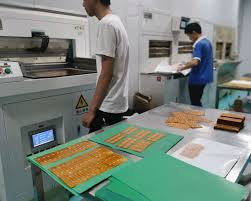
How to Ensure Quality in PCB Board Assembly Manufacturing
Aerospace equipment requires a different set of PCBs that must be able to withstand high speeds and extreme temperatures. To achieve these goals, aerospace equipment often uses high-temperature laminates and aluminum substrates, as well as thru-hole components and flex-rigid PCBs. Military equipment, too, requires powerful PCBs, which can be used in a variety of applications from communications to computer hardware and vehicles.
Industrial machines rely on PCBs to power and control various functions, from motor controllers to battery chargers. These devices must be able to handle high voltages and currents, so they often feature thicker copper PCBs. PCBs are also used in LED lighting, which has become a popular alternative to traditional bulbs due to its low energy usage.
Industrial automation PCBs must be designed for production, and this design must be adapted to the fabricator’s fabrication processes. This is often accomplished through the use of DFM guidelines, which are a set of standards provided by the fabricator that the OEM can consult during the design phase. These guidelines will help the designer ensure that the design can be produced consistently, ensuring quality throughout the manufacturing process. They can also improve efficiency by reducing production costs through automation and consistency. This can result in cost savings that are passed on to customers.